Before asking if AI can replace you, ask if you trust it
 KuWork
When a collaboration partner shifts from a tool to a colleague, trust becomes the new productivity bottleneck.
1. The replacement debate asks the wrong question
Every few months, another wave of panic about AI replacing people arrives.
First it was copywriters, then designers, then programmers, finance staff, and legal teams. Each new model brings the discussion back to the same question: can it replace me?
This question is popular because it feels urgent. But it is the wrong question.
The reason is simple: you do not control whether replacement happens. How far technology advances and how markets reorganize are far beyond any individual’s influence. Ten years of anxiety will neither slow nor accelerate the outcome.
But there is a more useful question—one you can answer for yourself:
Do you trust it?
Do you trust it to help with research? To organize your data? To move work forward according to your intentions when you are not watching?
This matters because AI is moving from tool to colleague. A tool requires skill to use; a colleague requires trust. Using a tool poorly may reduce efficiency. Trusting the wrong colleague can mean rework, financial loss, and a mess to clean up.
As AI moves from answering questions to doing work, trust becomes the new bottleneck.
2. Trust has three practical requirements
What do you need to trust someone?
It is not intelligence alone. You may be especially reluctant to rely on someone who is smart but unreliable.
You need three things.
First, explainability. When someone makes a decision, you need to know why. “I analyzed it and felt this was right” is not enough. They should explain the evidence and logic, and distinguish judgment from conjecture. You would hesitate to give important work to someone who cannot explain their reasoning.
The same applies to AI. When an AI partner finishes a competitor analysis, you need to know its information sources, comparison criteria, which conclusions are supported by data, and which are inferences. Without that clarity, relying on it is a gamble.
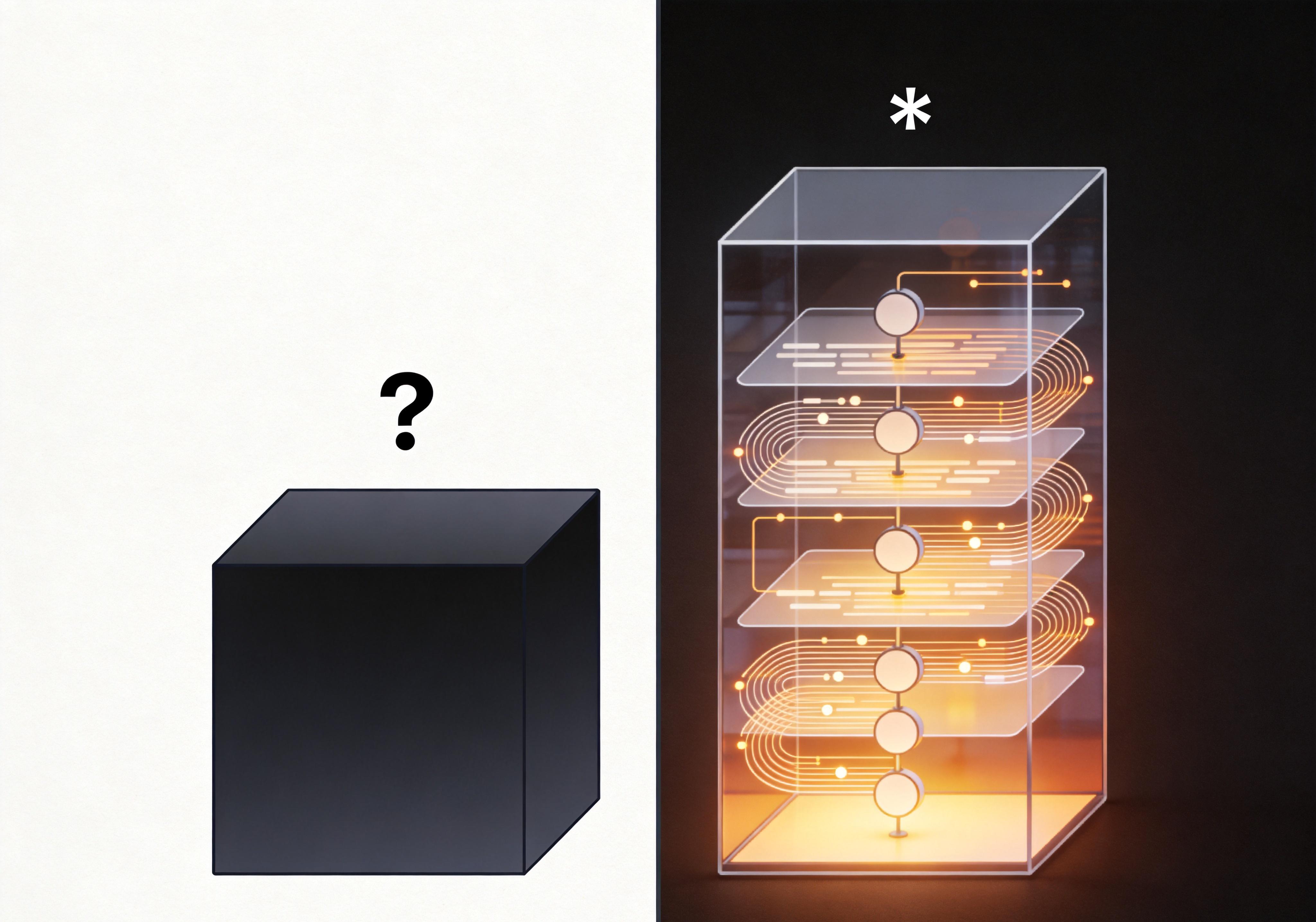
Second, traceability. When something goes wrong, you need to trace it back. Every step should be recorded and every checkpoint reviewable, rather than met with “I don’t know what happened.”
Much of human trust rests on knowing who to turn to when something goes wrong. AI collaboration is similar. If an AI partner prepares a data report and you later find a number that does not add up, you need to identify the step that failed, the inputs used, and who confirmed them. Without this, you have a black box rather than a working relationship you can rely on.
Third, the ability to intervene. You must be able to stop it at any time. At every checkpoint, you should be able to change direction, edit an intermediate result, or say, “I’ll take it from here.”
Trust does not mean leaving everything unattended. It means, “I’m letting you do this, and I can take over at any time.” A colleague you cannot stop is a risk. An AI you cannot intervene in is a black box.
These three requirements—explainability, traceability, and the ability to intervene—form the foundation of trust. They are concrete properties that can be tested in every collaboration, beyond feelings or brand promises.

3. More capable does not always mean more trustworthy
The problem is that most AI products are heading in the opposite direction.
They are becoming smarter and less transparent. You provide an instruction and get a result. What happened in between? Unknown. What was it based on? Unclear. How do you investigate errors? There is no path. Can you step in halfway through? There is no interface.
This is an industry habit rather than a problem with one product: equating “more powerful” with “better.” Stronger models, more features, faster speeds—but few people ask what greater capability means for users if they cannot trust it.
It means greater risk too.
If an AI only answers questions, you can ask again when it gets something wrong. But when AI executes work without explanations, traceability, or opportunities to intervene, mistakes cost more than a wrong answer. It might send a poorly worded email, produce a report using inconsistent data definitions, or advance a process that should not proceed—all while you cannot see how it happened or where to stop it.
When capability grows faster than trust, so does the potential for harm.
That is why the replacement debate misses the point. The real question is whether you are willing to let AI help as its capabilities grow.
Your willingness depends on trust. Trust depends on explanations, traceability, and control.
4. KuWork’s view: transparency matters more than intelligence
This is a principle KuWork follows when building its product.
KuWork is an AI work partner platform. Its purpose is to build a transparent partner you can entrust with work.
The idea is straightforward. Give Super Ku a goal, such as “Review last month’s channel data and prepare a report,” and you can follow the work as it happens. See how it interprets the goal, breaks it into tasks, brings in AI partners, and develops the results. Every step is recorded, and you can review, edit, or stop the work at each checkpoint.
Super Ku understands and organizes the work; AI partners handle specific tasks. The work and its results stay in a project, so you or your team can pick up where you left off.
At critical moments, you remain in charge.
This is a considered answer to an important question: what should AI handle, and what must people decide?
AI can organize information, draft content, and handle repetitive tasks. People should still decide whether the data is being interpreted correctly, whether a conclusion is sound, and whether something is ready to send externally. These decisions carry responsibility, and someone must own them.
You set the goal. Your partners deliver. You decide what matters.
The principle is simple: let AI handle the execution while people keep the authority to decide.
5. Efficiency is the outcome. Trust comes first.
Back to the original question: what should companies invest in?
Over the past two years, many companies have focused their AI investments on buying more power: stronger models, more agents, and broader coverage. Far fewer have asked whether their teams will feel comfortable using it.
Reluctance is not always a lack of skill. It can be a lack of trust.
They do not trust it to follow their intentions, leave a clear record when something goes wrong, or stop when it matters.
That is why efficiency gains remain elusive. Without trust, even a highly capable AI becomes little more than an advanced search engine: the team asks a question, looks at the answer, then does the work again from scratch.
Efficiency is the outcome. Trust comes first.
Companies should invest in working relationships they can rely on. That takes product features that explain decisions, keep a record of the work, and let people step in.
When an AI partner can explain its choices, let you investigate problems, and stop whenever needed, you can truly entrust it with work. That is when efficiency gains begin.
Trust is something you can test.
Put AI within reach of your whole team.
Connect expertise, enterprise knowledge, and real workflows with KuWork.