




The Truth Behind the AI Layoff Wave: How Can Companies Achieve Zero-Layoff Transformation with Technology Amid Amazon's 30,000 Job Cuts?

When Amazon’s 30,000 Layoffs Meet AI Job Replacement: We Uncover a Truth Bigger Than Layoffs!

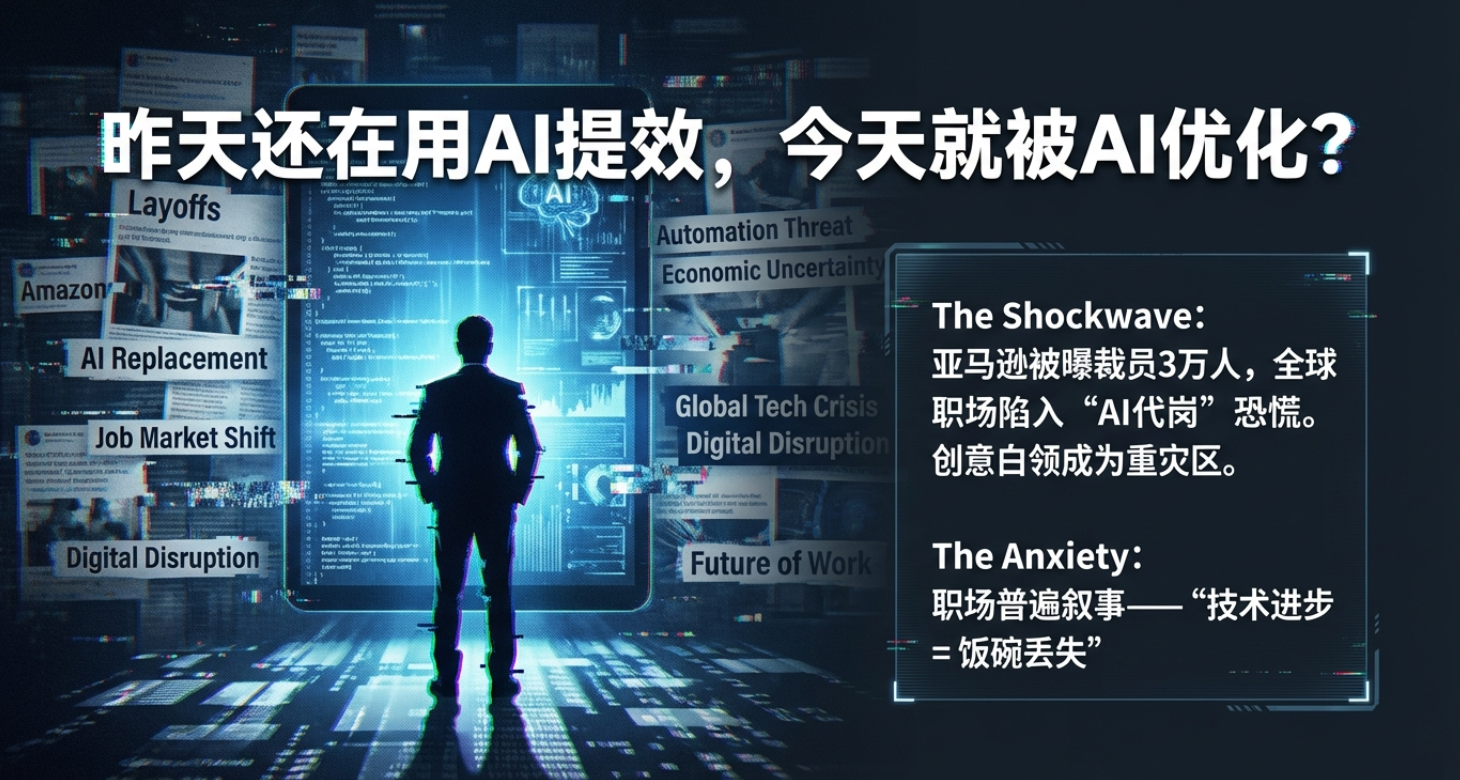
“One day I used an AI coding assistant to boost efficiency; the next I was ‘optimized’ by AI.” This dramatic scene is unfolding in workplaces around the world. Reports of Amazon cutting 30,000 jobs amid large-scale AI adoption have sent shockwaves through industries, with knowledge and creative workers bearing the brunt. But what is the real story? New OECD research shows that AI brings job structure optimization far more than simple layoffs.

I. Behind the Headlines: AI Must Not Be an Excuse for Layoffs

A recent wave of layoffs reveals three core truths:

1. Replacement vs. Empowerment: The issue is not AI technology itself, but whether companies treat it as a mere “cost-cutting tool” or an “employee empowerment partner”. How technology is used matters more than the technology alone.

2. Skills, Not Jobs, Are Displaced: The first roles affected are highly standardized, repetitive positions. AI replaces specific skill modules—not comprehensive roles that require decision-making, innovation, and emotional interaction, whose human value only grows more important.

3. Legal Red Lines Exist: Technological upgrades cannot serve as a “fig leaf” for unlawful dismissal. Relevant laws and precedents make clear: companies have a duty to offer job transfers and training to affected employees, turning technological change into opportunities for growth.

II. KuaLu’s “Human-AI Collaboration” Model: AI as Assistant, People as Core

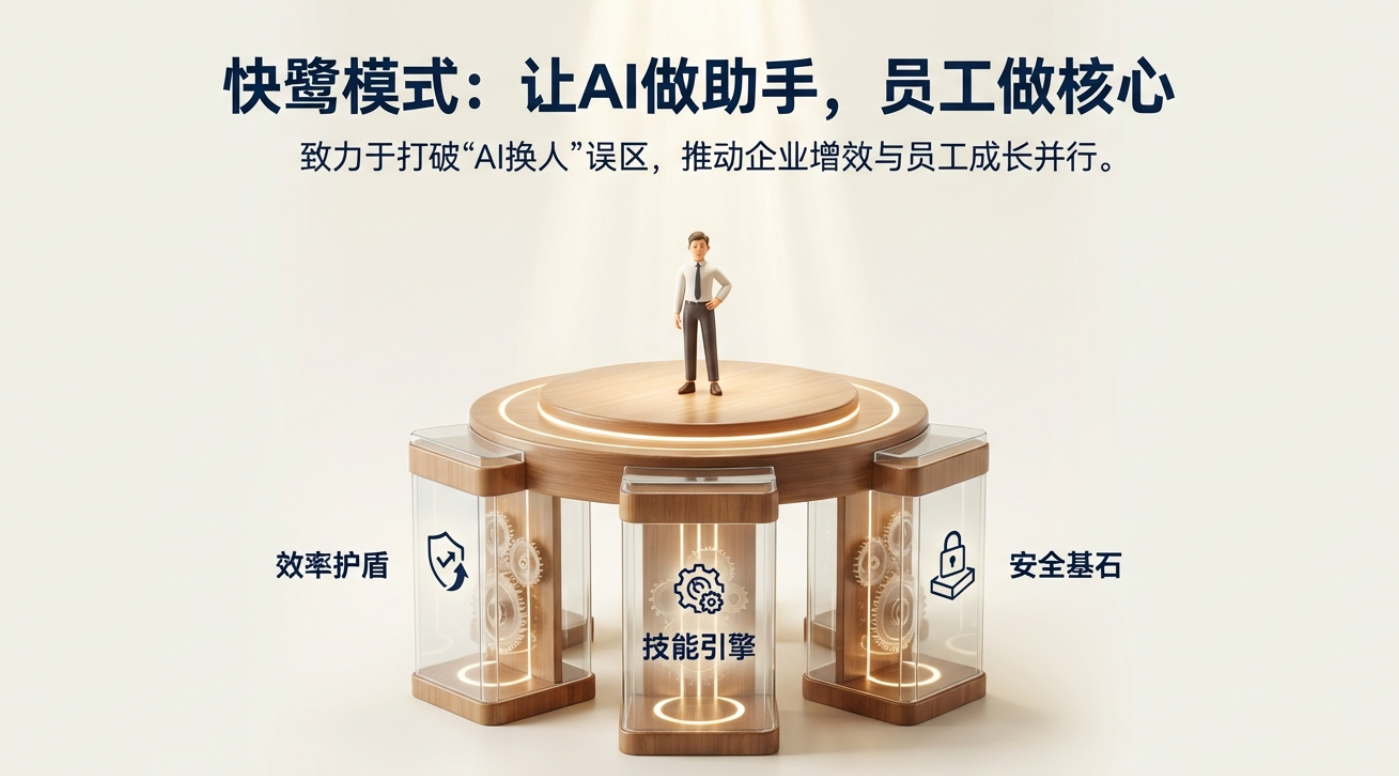
The KuaLu Smart Office System is committed to breaking the myth of “AI replacing humans”. Through its core design, it helps businesses grow efficiently while developing their people:

1. AI handles repetition; employees focus on high-value work: AI automatically generates meeting minutes, intelligently processes workflow approvals, and even hosts meetings via digital avatars to sync key information. This frees employees from tedious tasks so they can focus on judgment, creativity, and coordination—driving major efficiency gains.

2. Low-code platform upgrades employee skills: Our visual low-code development platform lets business users build applications via drag-and-drop, no deep technical background required. It quickly responds to business needs while equipping employees with valuable digital skills for “role advancement”.

3. Private deployment ensures security and stability: Our private deployment scheme protects core business data and meets strict compliance demands in finance, government, and other sectors. This eases employee concerns over data security and job stability, laying the groundwork for confident adoption of new technology.

image.png

III. Industry Examples: AI Transformation With Zero Layoffs

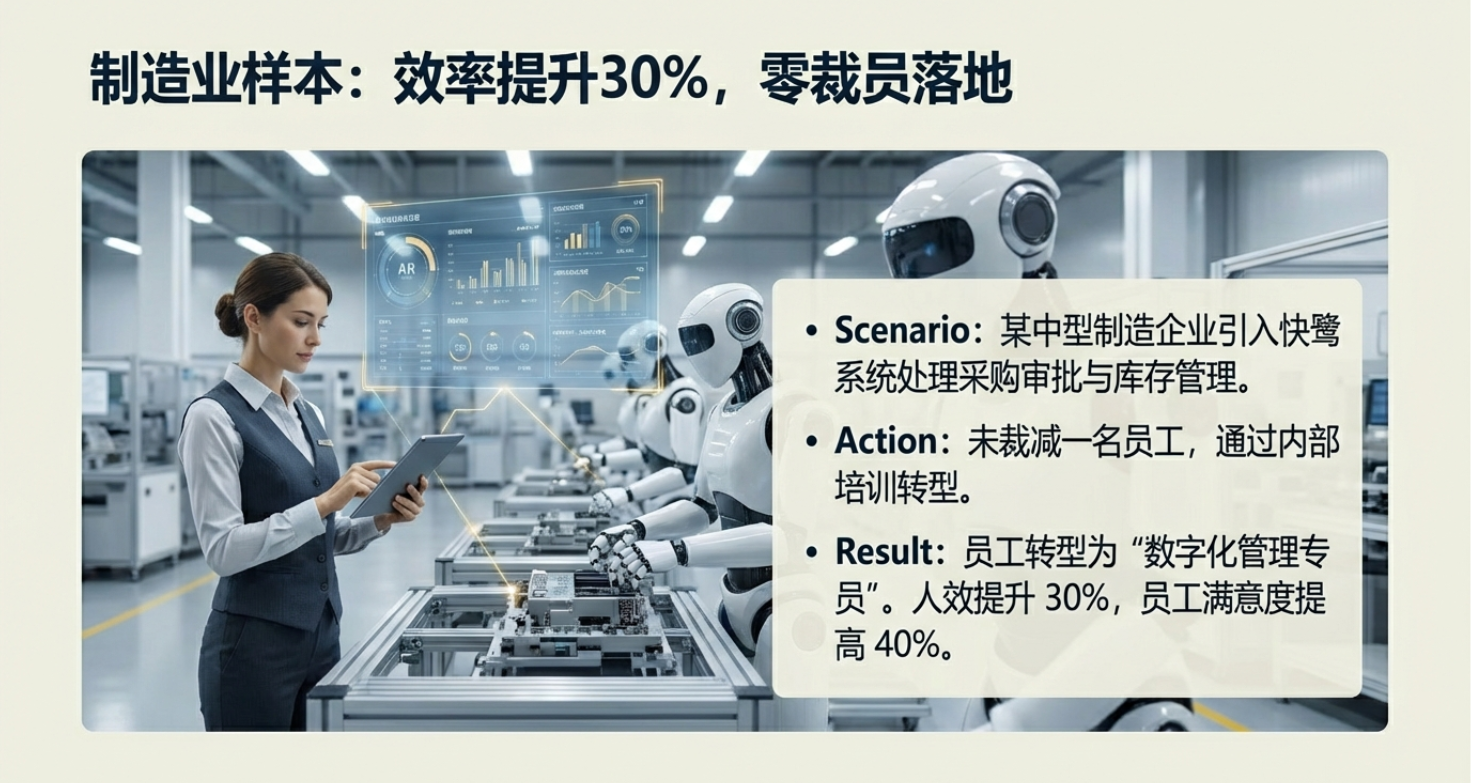
Manufacturing: 30% Higher Efficiency, Zero Layoffs

After implementing the KuaLu system, a mid-sized manufacturing firm automated procurement approvals, inventory management, and other workflows. Rather than cutting staff, the company retrained employees to become digital management specialists. The result: a 30% rise in workforce productivity and a 40% improvement in employee satisfaction.

Finance: Upgraded Service, Empowered Teams

A regional bank used KuaLu’s AI Meeting System. AI assistants automatically organized client information and needs, freeing relationship managers from basic data work to focus on high-value customized wealth management. The team avoided layoffs entirely, and business volume rose 25% thanks to better service quality, strengthening overall capabilities.

IV. The Right Approach to Corporate AI Transformation: 3 Steps to Win-Win

Position AI correctly: Treat AI as an “assistant” for repetitive work, not a “replacement” for employees. Use tools to free up people, not simply substitute them.

Build skill-upgrade pathways: Invest in employee retraining, especially through low-code platforms, to help teams master AI-driven process digitalization.

Uphold compliance and humanity: Strictly follow labor laws during tech iteration. Prioritize internal transfers and training to support staff, balancing technical optimization with human care.

image.png

V. For Individuals: Staying Competitive in the AI Age

For working professionals, proactive evolution is key:

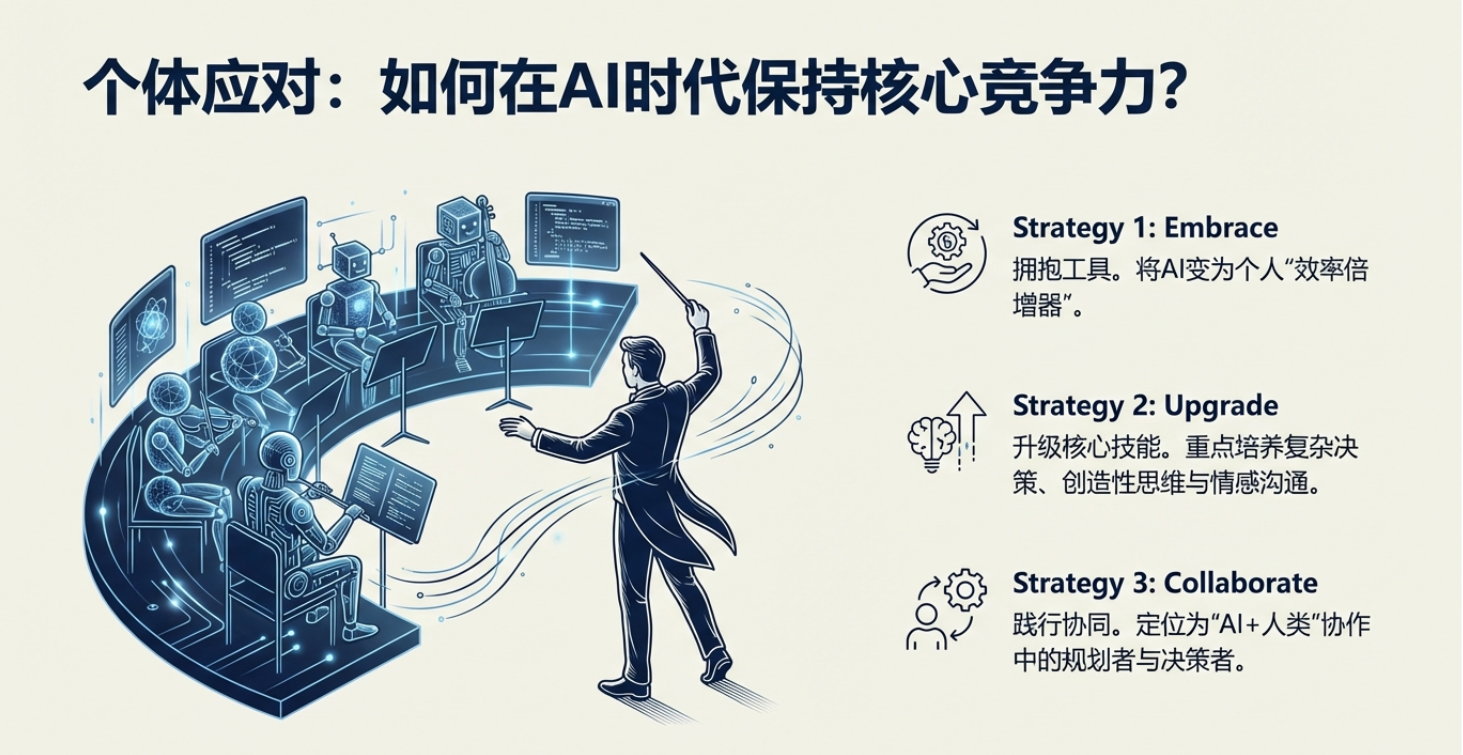
1. Embrace tools: Learn and use AI tools to become your own “efficiency multiplier”.

2. Upgrade core skills: Develop complex decision-making, creative thinking, and emotional communication—skills AI cannot easily replicate—while learning digital skills for human-AI collaboration.

3. Practice collaboration: Use AI for basic work, and position yourself as the planner, decision-maker, and innovation hub in “AI + human” teamwork.

VI. Conclusion: The Ultimate Value of AI Is Empowerment, Not Replacement

The wave of AI technology is unstoppable—but its real purpose is to empower people, not replace them. A company’s long-term competitiveness increasingly depends on balancing efficiency and humanity, letting employees and technology grow together. This is a far more important challenge than navigating any single “layoff wave”.