Taking AI agents from demo to daily work
 KuWork
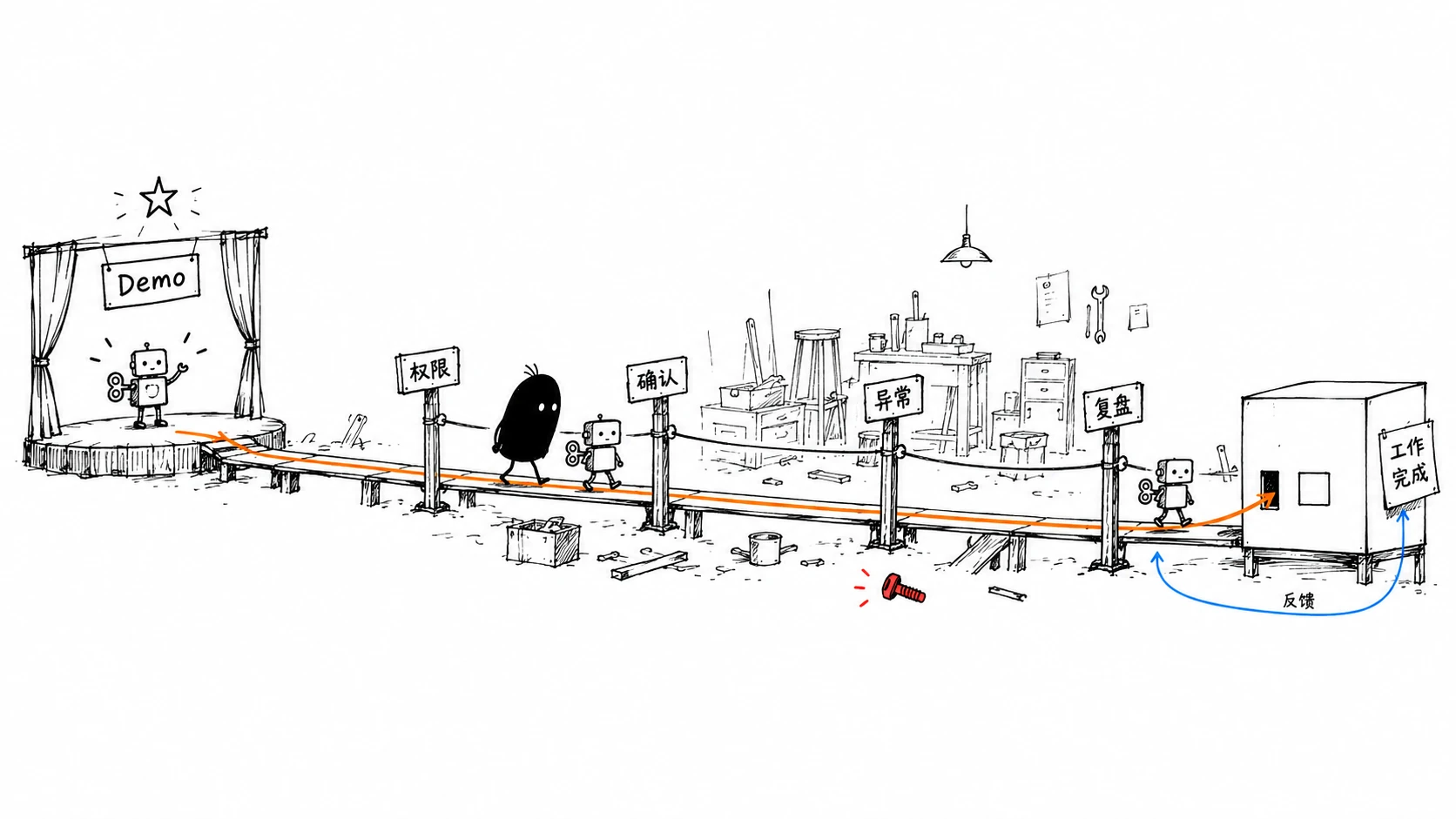
An agent completing a task in a demo does not mean it is ready for a real workflow. Demos usually have clean inputs and a single goal. Real work involves incomplete information, changing rules, handoffs between people, and someone who must take responsibility for the outcome.
The hardest problems are often the exceptions that never made it into the original demo.
Do not confuse “capable” with “ready to be trusted”
When an agent can retrieve information, generate content, or call systems, teams quickly ask whether it can do even more automatically. But the boundaries of automation depend on stable tasks, reliable materials, verifiable outputs, and the ability to stop safely when something goes wrong.
This is not excessive caution. Automation without clear boundaries often shifts people from repetitive work to more expensive damage control.
One easily misread signal is a demo in which every step runs smoothly, using prepared materials, fixed inputs, and a presenter always on hand. Real work brings the opposite: missing inputs, changing rules, exceptions, and people taking over without knowing the demo’s unstated assumptions. To join a workflow, an agent must remain visible, correctable, and open to human takeover under these conditions.
Four requirements for real-world use
- Clear task boundaries: What it handles, what it does not, and whether inputs and outputs can be verified.
- Trustworthy context: Traceable sources, update times, access permissions, and citations.
- Clear roles for people and AI: What is a suggestion, what needs confirmation, and who owns the final outcome.
- An observable feedback loop: Visibility into the process, anomaly detection, the ability to stop actions, and correction based on feedback.
The feedback loop is the easiest condition to overlook. Without feedback and exception records from actual use, teams cannot tell whether a problem came from task design, source quality, or the agent’s behavior—and cannot improve it.
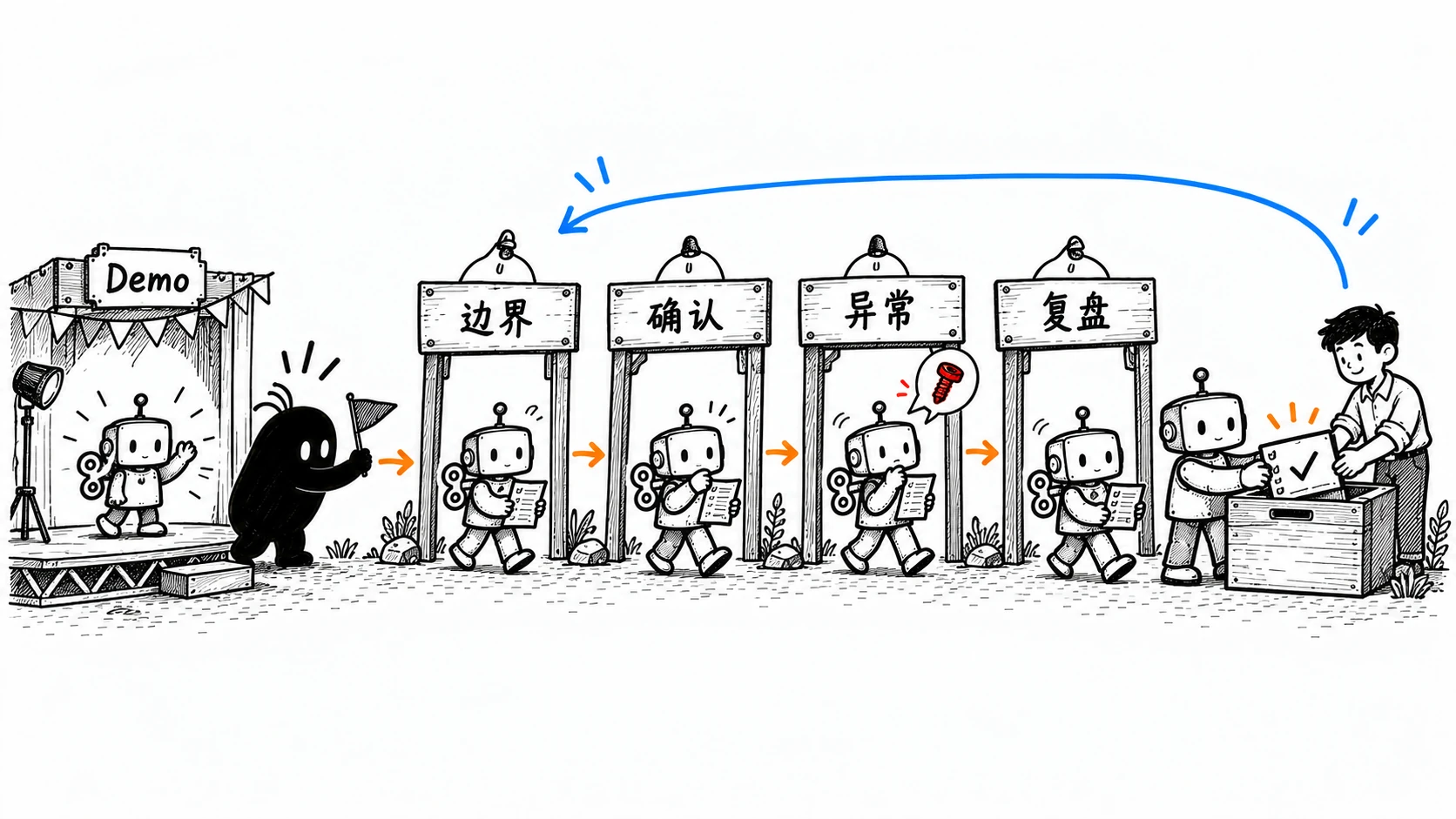
This does not mean every step needs approval. Low-risk, reviewable preparation can proceed automatically. Critical judgments, external messages, spending, and important system writes should require confirmation under business rules. Decide in advance what can run automatically, who takes over, and how to resume after a stop, rather than debating these questions during an incident.
An agent’s maturity shows in whether the team can see, handle, and correct uncertainty when it appears.
From AI assistance to accountable collaboration
Start by letting the agent suggest approaches or prepare materials in low-risk, reviewable steps, while people make the final judgments. Expand automation only after task boundaries, source quality, and exception handling are stable.
This gives the agent a chance to become a lasting team capability, beyond a one-off demonstration.
Start with assisted tasks in KuWork
KuWork supports tasks organized around project context, with AI partners for research, analysis, writing, and other work. Task updates and human confirmation can preserve necessary judgment points; project history and outputs support continuation and review. A suitable first step is to have the agent prepare reviewable materials, such as summaries of authorized sources, cited drafts, or next-step tasks based on agreed rules, before entrusting it with irreversible actions.
For system connections, data reads and writes, scheduled automation, or lightweight app publishing, verify the current version’s authorization rules, action scope, exception handling, and pause-and-resume mechanisms individually. A successful demo does not mean automatic execution is authorized in every enterprise environment.
Frequently asked questions
Which tasks should you try with an agent first?
Frequent tasks with relatively stable rules, reviewable results, and human takeover available at any time are usually good starting points.
How can we tell when to expand automation?
Observe exception types, points requiring human intervention, and output quality over time. Expansion has a sound basis only when these can all be explained and managed.
Something you can do today
Create a controlled-operation card for a candidate agent: what it does and does not handle, what sources it may use, who confirms critical results, who stops it and takes over during exceptions, and how results are recorded. Run this through a full business cycle before discussing broader automation.
Put AI within reach of your whole team.
Connect expertise, enterprise knowledge, and real workflows with KuWork.