More meetings. Why are decisions still slow?
 KuWork
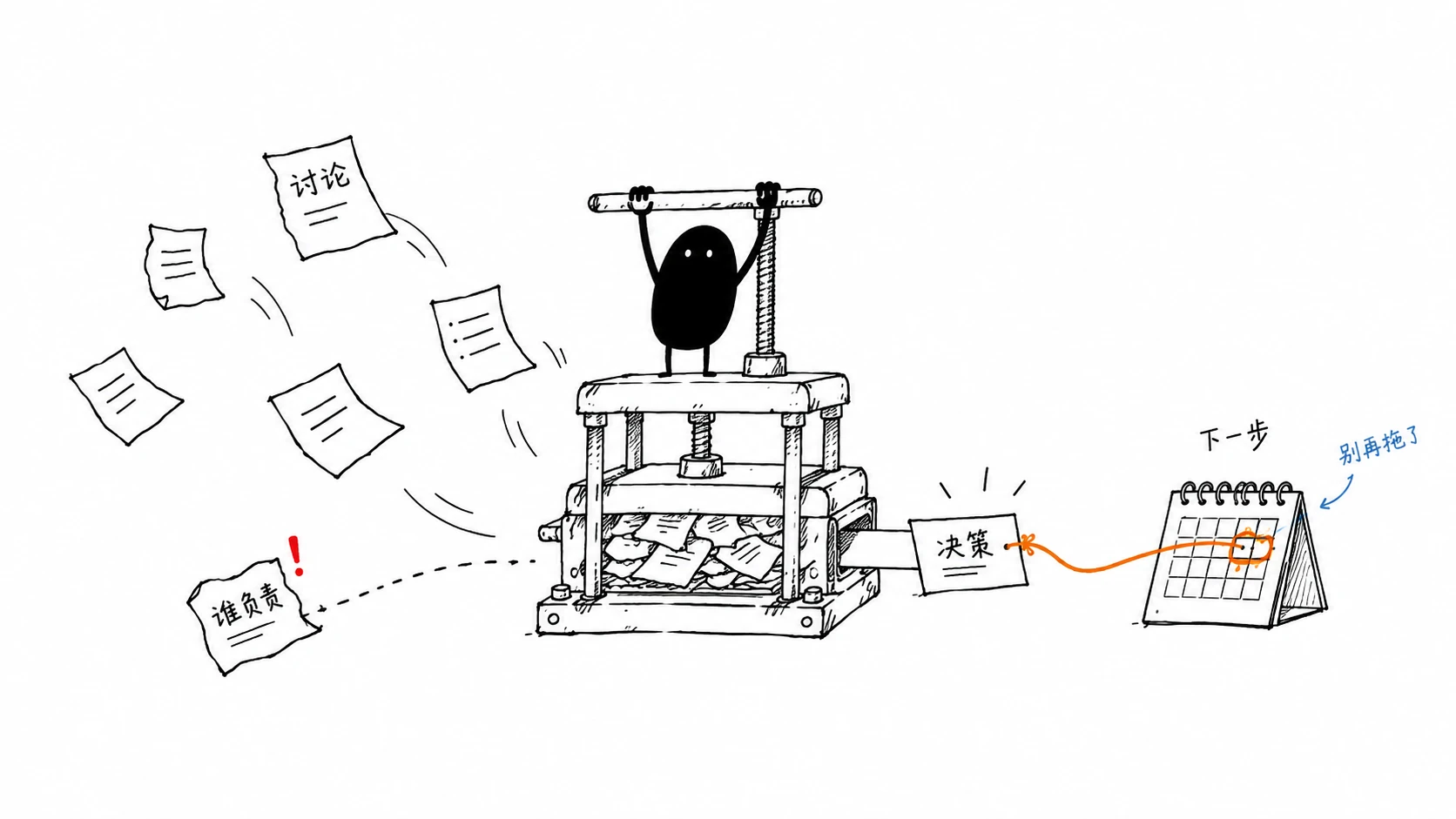
Slow team decisions often begin after the discussion ends: nobody writes down who decides, on what basis, or what happens next. As meetings multiply, responsibility becomes diluted and progress gets harder.
Before scheduling another meeting
When a project stalls, teams often invite more people to a meeting. But if nobody can explain the specific decision, who has final authority, what information is missing, or the deadline afterward, the next meeting will probably repeat the same disagreements.
Three kinds of friction commonly slow decisions:
- The problem is not specific enough. People debate whether a proposal is good without agreeing on its users, scope, or success criteria.
- Information is scattered across chats, documents, and people’s memories. New participants have to start by asking for the whole story.
- Decisions are not documented. Each change during execution reopens the question of why the original choice was made.
Without clarity on these three points, meetings easily circle in place: someone adds information, someone repeats an old concern, and nobody can move forward.
Another overlooked source of friction is confusing the roles of providing information, raising objections, and making the final call. Everyone then feels their agreement is required, making meetings hard to end. Separate these roles to focus discussion on who must supply facts and who must make tradeoffs.
A useful meeting gives disagreements a factual basis and decisions a clear owner.
Turn a discussion into an actionable decision
Start with a simple decision page. It needs no elaborate template, but should include five things: the question to decide, known facts and assumptions, alternatives, the decision owner and deadline, and the conclusion with next actions. Prepare the first four before the meeting, discuss only unresolved disagreements during it, and have the owner record the conclusion and changes afterward.
For cross-functional matters, add one rule: anyone raising an objection should explain its impact and suggest an alternative. Discussion can then compare tradeoffs instead of stopping at “I do not think this works.”
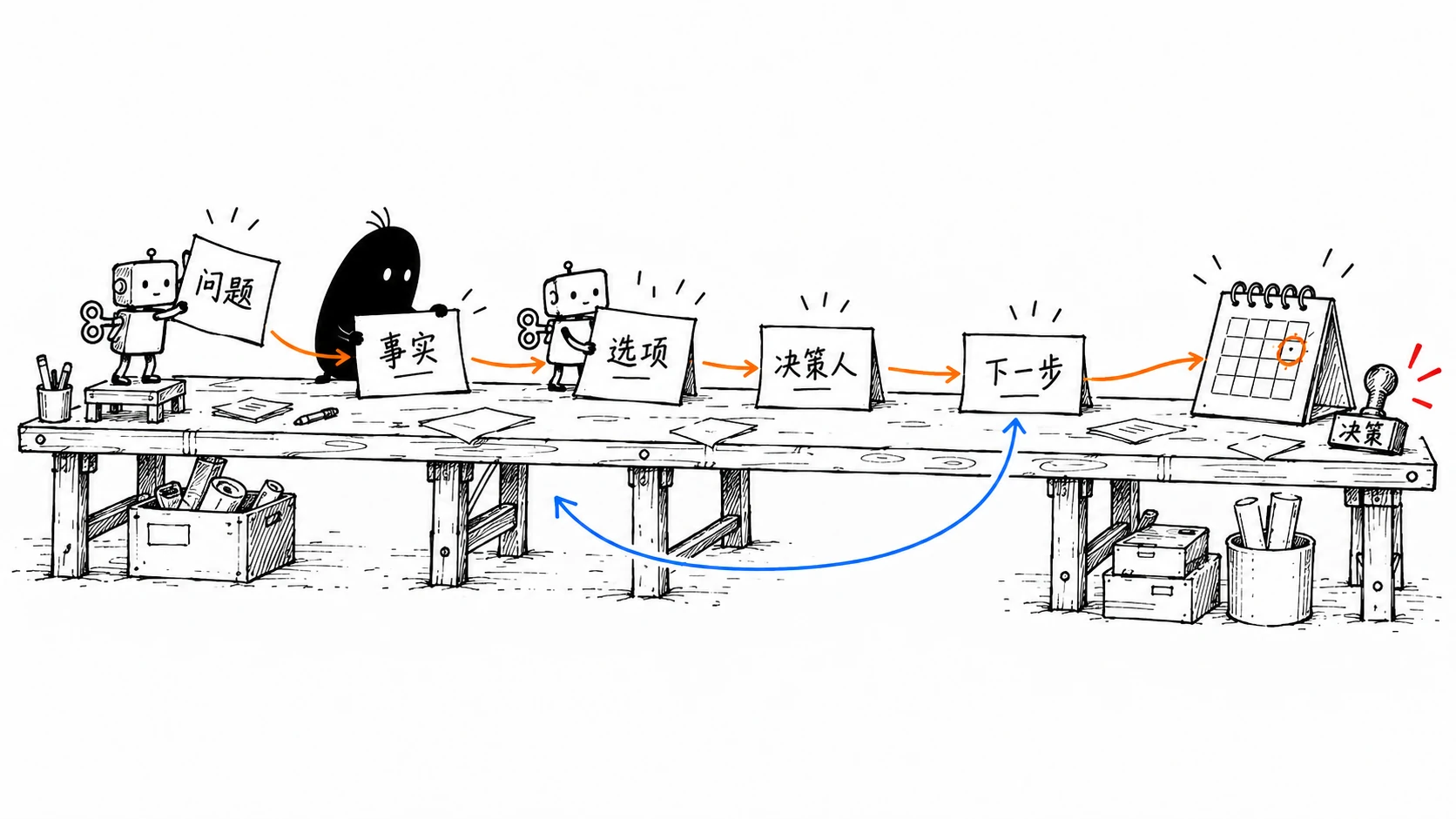
This is not a rigid template, just a useful order for the information a page should contain. People who were absent can see what is stuck, which fact is missing, and who will decide by when. Writing this before the meeting resolves many questions without another meeting.
Carry decisions through to execution
Teams organizing projects in KuWork can keep the decision page in the project instead of letting it become a screenshot buried in chat. Keep the background, sources, and alternatives together; have the owner add the conclusion and follow-up tasks; and let anyone adding information follow the existing context. It does not decide for people—it saves the effort of explaining the background every time.
Confirm two things before starting: which materials can be shared in the project, and which decisions still require the business owner’s approval. For budgets, contracts, or major changes across systems, records and collaboration tools cannot replace human approval responsibilities.
Start with one recurring type of decision
There is no need to redesign every meeting at once. Choose one frequently recurring situation, such as prioritizing requirements, project delays, or customer feedback, and use decision pages for two weeks. Watch two things: does the same issue still need repeated explanation, and can executors act without asking follow-up questions?
Instead of counting fewer meetings, look at whether the same issue needs less repeated explanation.
Something you can do today
Choose a question that must be decided this week. Put the decision, knowns and unknowns, at least two options, the decision owner, and the deadline on one page. Before ending the meeting, check whether someone who was absent could use it to start the next step. If not, the conclusion is not yet actionable.
Frequently asked questions
How do we stop every decision waiting on one busy person?
Define which decisions require that person, and delegate the rest to named owners. Escalate only when budget, direction, or cross-team risk is involved.
Will decision records add more work?
Keep only facts, tradeoffs, and owners that affect action. The record is sufficient when the next participant can pick up the work.
Put AI within reach of your whole team.
Connect expertise, enterprise knowledge, and real workflows with KuWork.