Clearer tasks. Less rework.
 KuWork
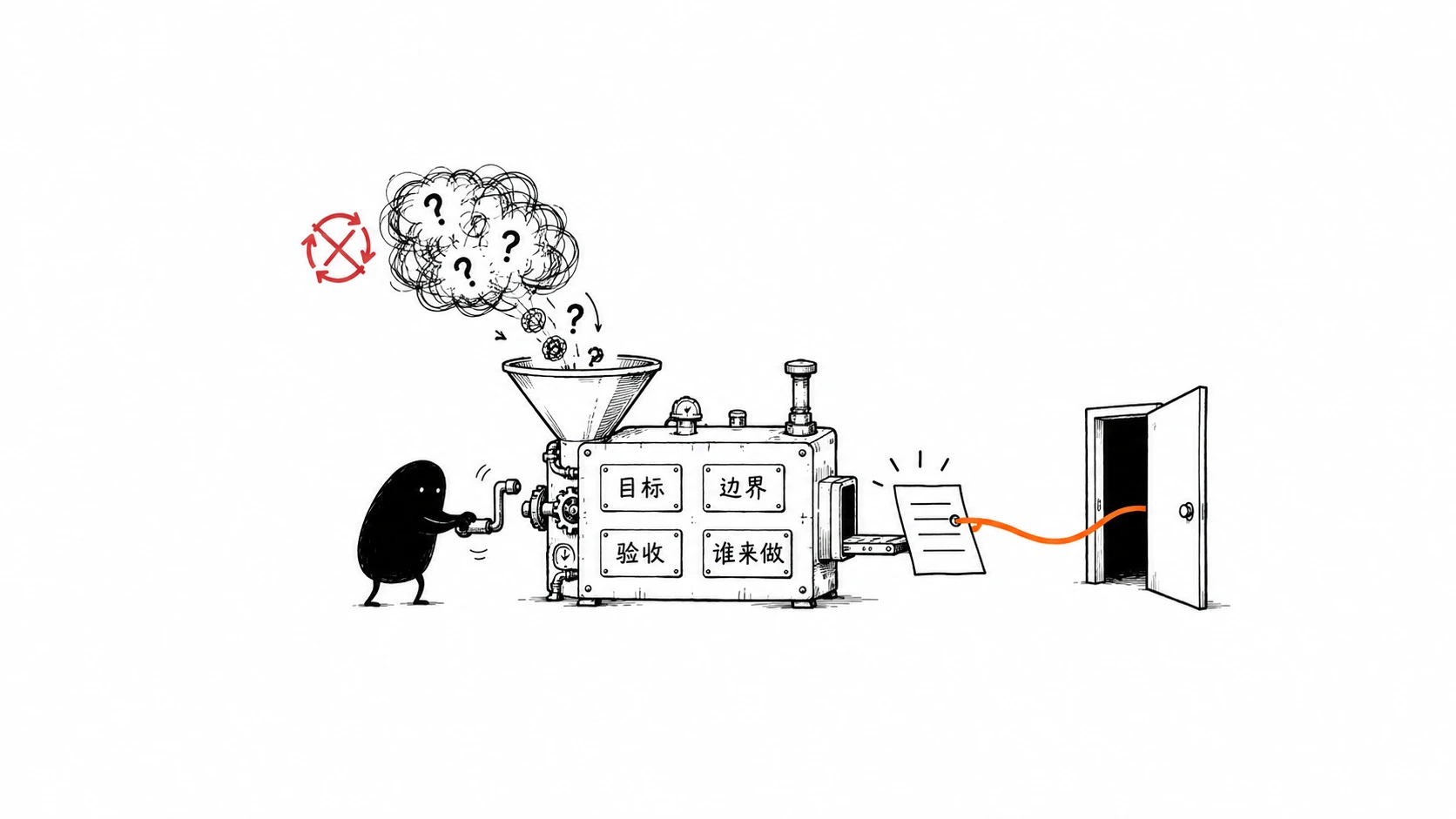
Much rework is built in from the start. A task specifies an action but leaves out the audience, boundaries, completion criteria, and priorities. The person doing it fills the gaps with their own assumptions and delivers something that took plenty of effort but was not what the requester wanted.
“Put together a proposal” is not enough
“Work on the proposal” can mean at least four different things: who it is for, what problem it should solve, how much detail it needs, and when and in what format to deliver it. When these remain unsaid, team members guess from their own experience.
This is why greater urgency often brings more rework. Speed magnifies effort in the wrong direction; it does not clarify the goal.
For example, “Prepare a customer event proposal by next week” sounds clear but still omits key details. Is it for an internal decision or external execution? What budget, brand constraints, and materials are available? Should the first deliverable be a one-page direction or a full execution plan? These interpretations involve very different workloads and evaluation criteria.
One person starts with layout, another researches, and another contacts the customer. Everyone is working, but from different starting points.
Four questions that turn a vague request into a clear task
When a task arrives, first confirm these four points:
- Who is this for, and what problem does it solve? Go beyond “run an event”: name the audience and the outcome you want to change.
- What is outside the scope this time? Clearer scope makes it harder for last-minute additions to derail execution.
- What counts as done? Specify the deliverable, essential content, review criteria, and deadline.
- Who confirms the direction, and who drives the work? Do not blur decision-making and execution into “everyone take a look.”
These questions bring implicit expectations into the open. When task owners supply the answers upfront, team members do not have to keep guessing because they are afraid to ask.
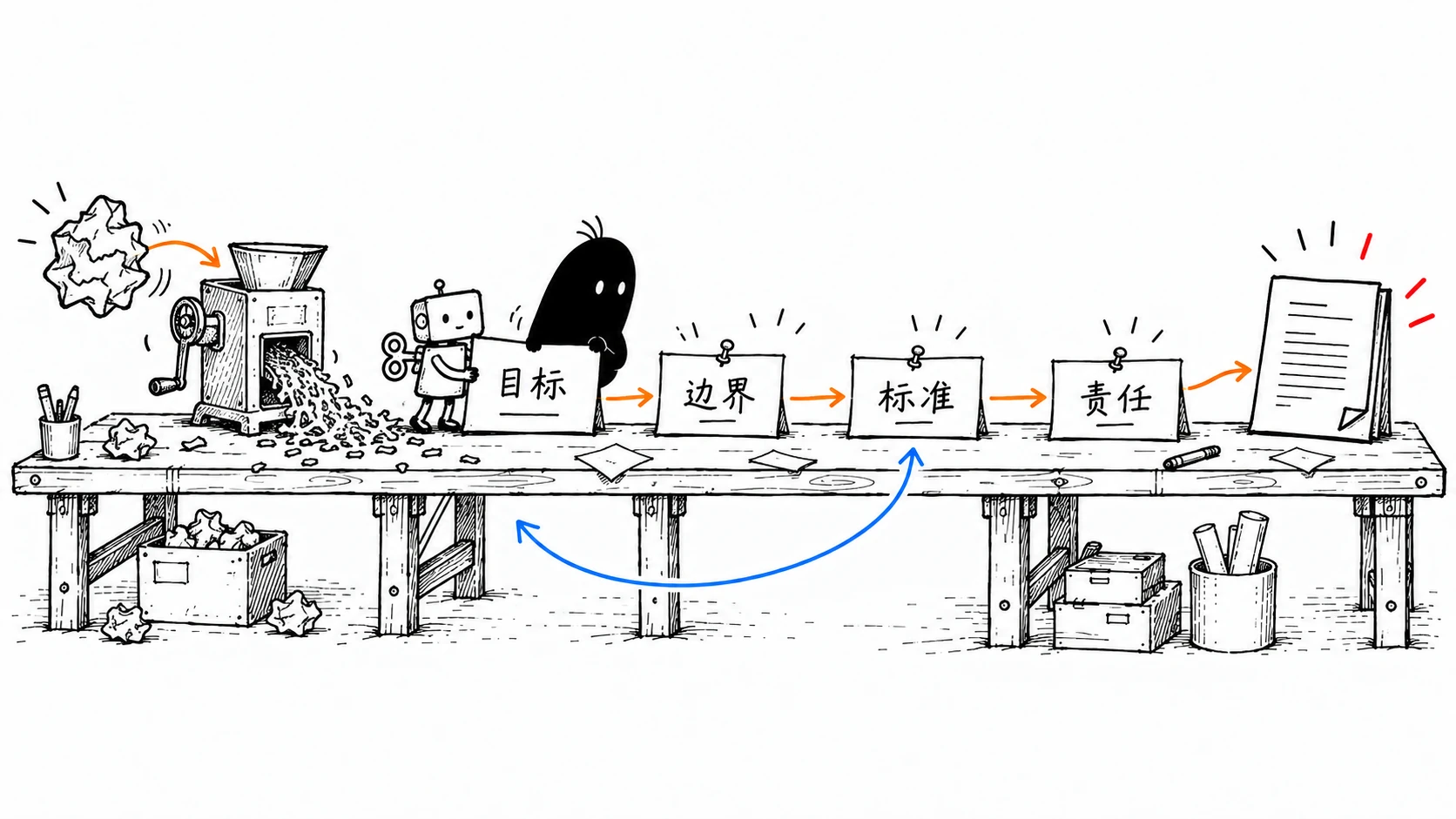
Once the four questions are answered, there is no need for a lengthy task brief. Make each answer checkable: what the goal should change, what is out of scope, the deliverable and how it will be judged, and who drives the work and confirms key milestones. The blanks in the diagram need real business input, not guesses from AI or the person carrying out the task.
Use small checkpoints to prevent major rework at the end
Long tasks benefit from three brief checkpoints: confirm goals and scope before starting, review work in progress to confirm direction, and check the criteria before delivery. The midpoint check needs only enough material to reveal whether everyone shares the same understanding.
Align while differences are still small, before discovering a wrong turn just before delivery.
Keeping these confirmations together lets newcomers see why decisions were made. Execution no longer depends on one person remembering every verbal instruction.
Keep the context with the task
In KuWork, tasks can move forward within shared project context, keeping sources, discussions, and outputs along the same chain of work. A useful approach is for the owner to write a clear brief, the executor to identify missing information, and the team to save work in progress and key tradeoffs to the project. The responsible person then confirms the final direction. This can reduce repeated explanations, but it does not automatically make a task reasonable or replace existing permissions and review processes.
For customer, financial, or sensitive internal information, first determine what can enter the project and who may access it. Permissions across projects and systems depend on the current configuration.
Frequently asked questions
If a manager says “just make a first version,” do we still need all these questions?
Confirm with little overhead: send a short restatement, a minimal deliverable, and a deadline, asking them to correct only the important misunderstandings.
Is clarification still useful when requirements keep changing?
Yes. A record shows what each change affects and makes it easier to reconfirm priorities.
Something you can do today
The next time someone asks for a first version, you do not have to ask everything at once. Send four lines: your understanding of the goal, what is out of scope, the smallest version you will deliver first, and who needs to confirm it by when. The other person only needs to correct key misunderstandings, bringing the causes of rework into view early.
This restatement also creates a shared starting point, so later changes can be checked against something more reliable than memory.
Put AI within reach of your whole team.
Connect expertise, enterprise knowledge, and real workflows with KuWork.