Keep team learning beyond the project
 KuWork
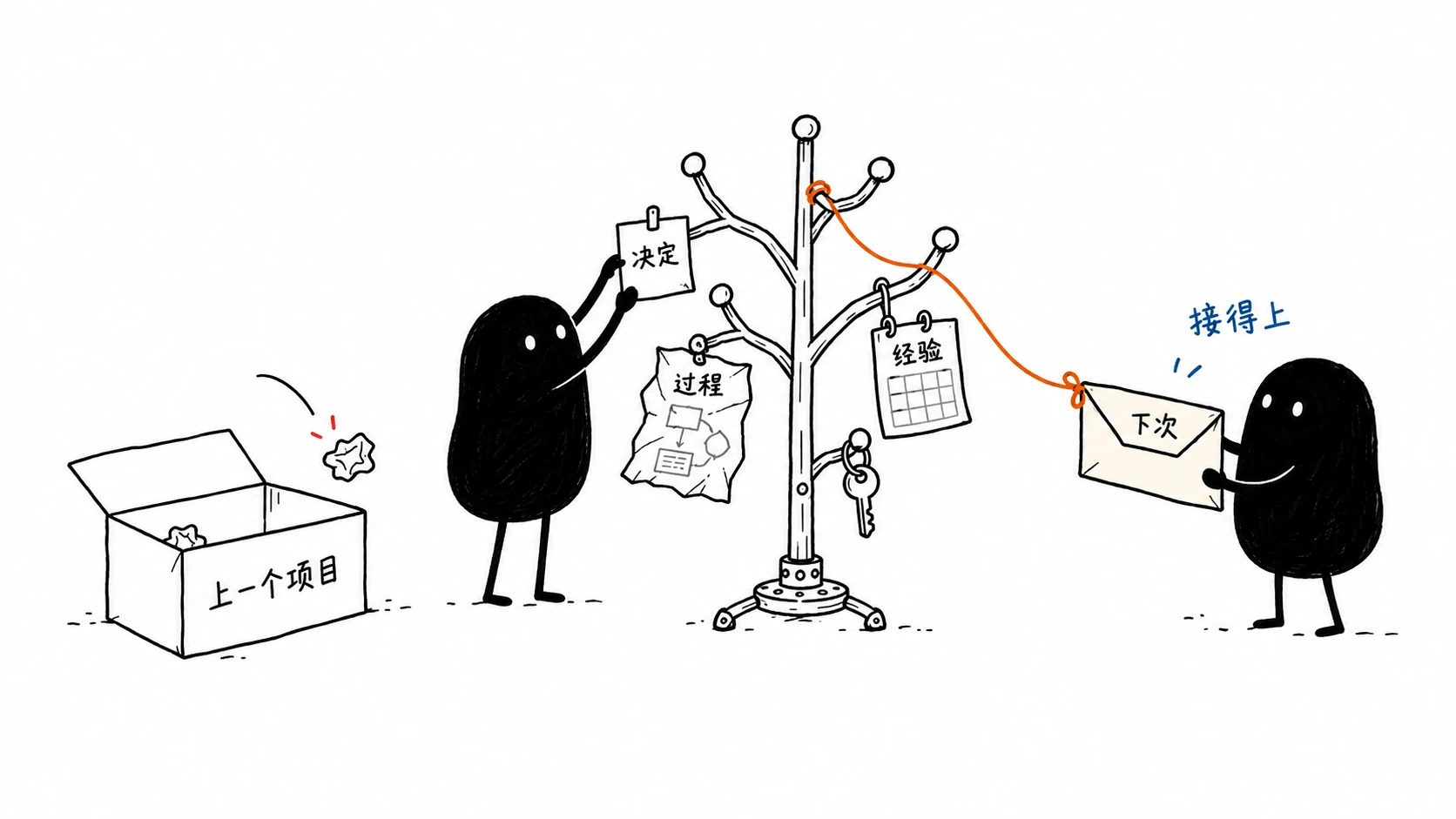
When a project ends, the files often survive while the reasoning gets lost. Why did the team choose that direction? Which risks surfaced early? Who needed to work together? The answers often live only in a few people’s memories. When the next project begins, the team starts asking the same questions all over again.
A few months and a change of projects later, people often remember the decision but no longer remember how they reached it.
A retrospective should do more than close the project
Many retrospectives become activity logs: what was done, what was sent, and which meetings were held. These documents are hard to reuse because they leave the important questions unanswered. What constraints did you face? What trade-offs did you make? What happened? What would you do differently next time?
Useful lessons come from failed projects too. A delay, a bad call, or a missed handoff can teach the next team something—if you record what happened, the circumstances, and what you changed.
For example, “We changed the proposal because the client’s feedback was poor” records only the outcome. A more useful account explains which information was misunderstood, what the team changed, and what it plans to validate earlier next time. This preserves the basis for the decision, the action taken, and the assumptions still to be tested.
Capture four things the next team can use
A useful project record can be just four sections:
- Context and goals: What you were trying to solve, and the constraints you had to work within.
- Key decisions: What alternatives were considered, and why this one was chosen.
- Supporting records: Where to find key milestones, who worked together, and materials worth reusing.
- Recommendations for next time: What to reuse, what to avoid, and what to validate first.
The most important step is to connect this record to real work. Having the project owner add a page at delivery, retrospective, or handover is easier to sustain than a year-end knowledge cleanup.
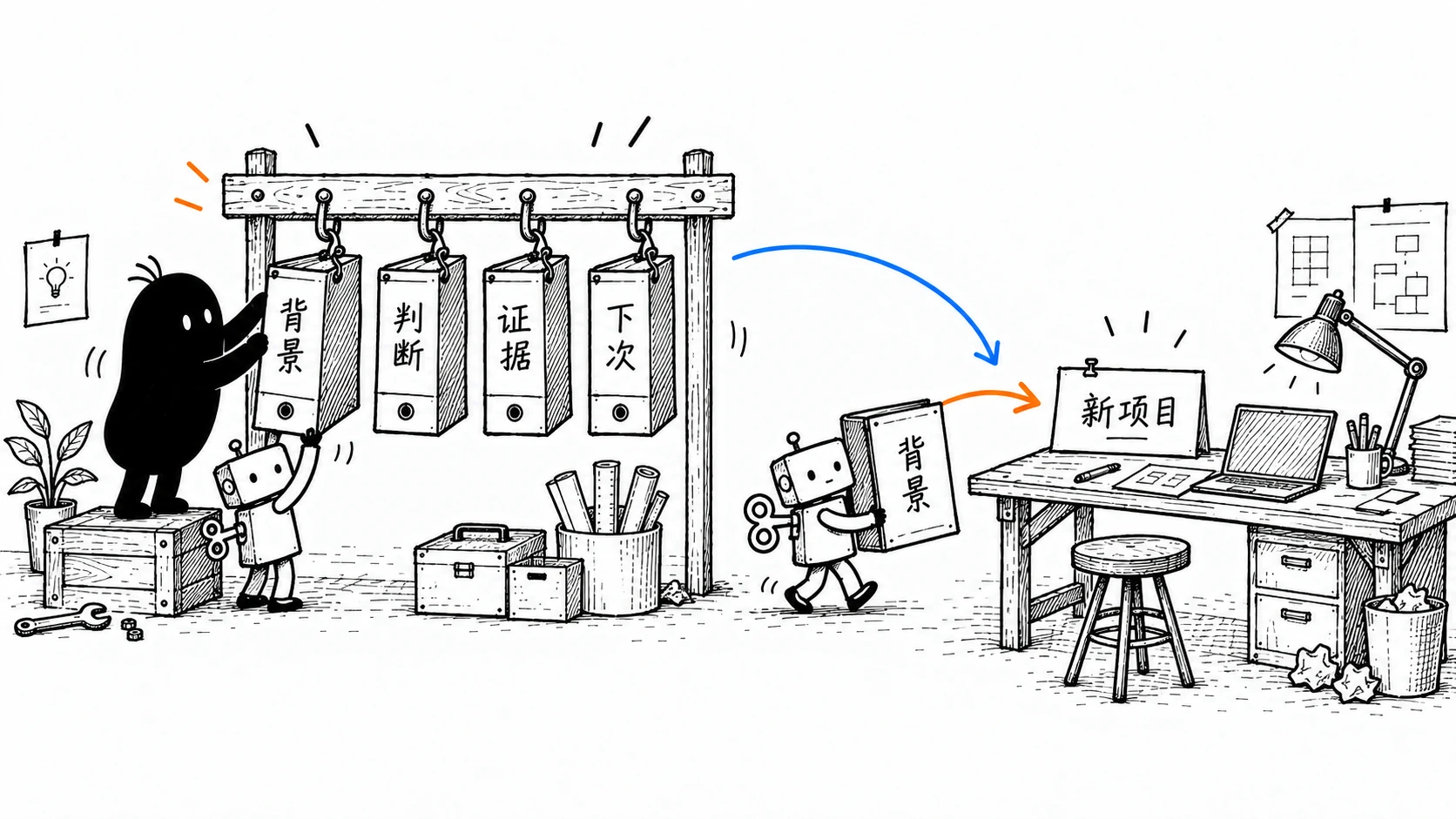
The next person usually has four questions: Is this like my situation? Why did the team choose this approach? Where are the original materials? Should I follow this example or avoid it? If the record leaves one unanswered, it is still just an archive.
Do not let your knowledge base become another file dump
A useful record helps the next person answer, “Does this apply to my problem?” Write titles around the situation and problem. Note when the advice applies and when it was updated, then link to the original decisions or deliverables. That makes it easier to find and use.
Make lessons easy to find, not just easy to save
KuWork projects, shared materials, and the enterprise knowledge base can hold work in progress, searchable business information, and reusable methods. Start with one project and link its key decisions to the original deliverables. Methods the team uses repeatedly can then be captured through training or rules. Check the current version and project permissions to confirm which materials can enter the knowledge base, how they are updated, and who can access them.
Someone still needs to own this work. A system can save records, retrieve them, and help people pick up where others left off. It cannot decide whether an old lesson still applies to a new market, customer, or rule.
A team has only kept a lesson alive when someone uses it again.
Start with a recently completed project that people still remember. Ask someone who was not involved to find the answers: can they understand the context, decisions, and next steps in ten minutes? Where they get stuck tells you what to improve.
Something you can do today
Choose a newly completed project and invite someone who was not involved to a ten-minute “find the answer” test. Ask them to locate the original goal, final trade-offs, reusable materials, and recommendations for next time. Note where they get stuck and fill the gaps in that one-page record. This makes quality standards more concrete than asking everyone to “write more retrospectives.”
After testing this across two or three projects, turn genuinely recurring issues into a team template.
Frequently asked questions
Who should document project lessons?
The people closest to the work should contribute, with the project owner checking that key decisions are covered. Do not leave it entirely to someone outside the project to reconstruct afterward.
Should we document failed projects too?
Yes. Describe the circumstances and trade-offs factually, without assigning blame. Lessons from failure can be especially useful in preventing the same costly mistakes.
Put AI within reach of your whole team.
Connect expertise, enterprise knowledge, and real workflows with KuWork.