Faster with AI. Why is the team still slow?
 KuWork
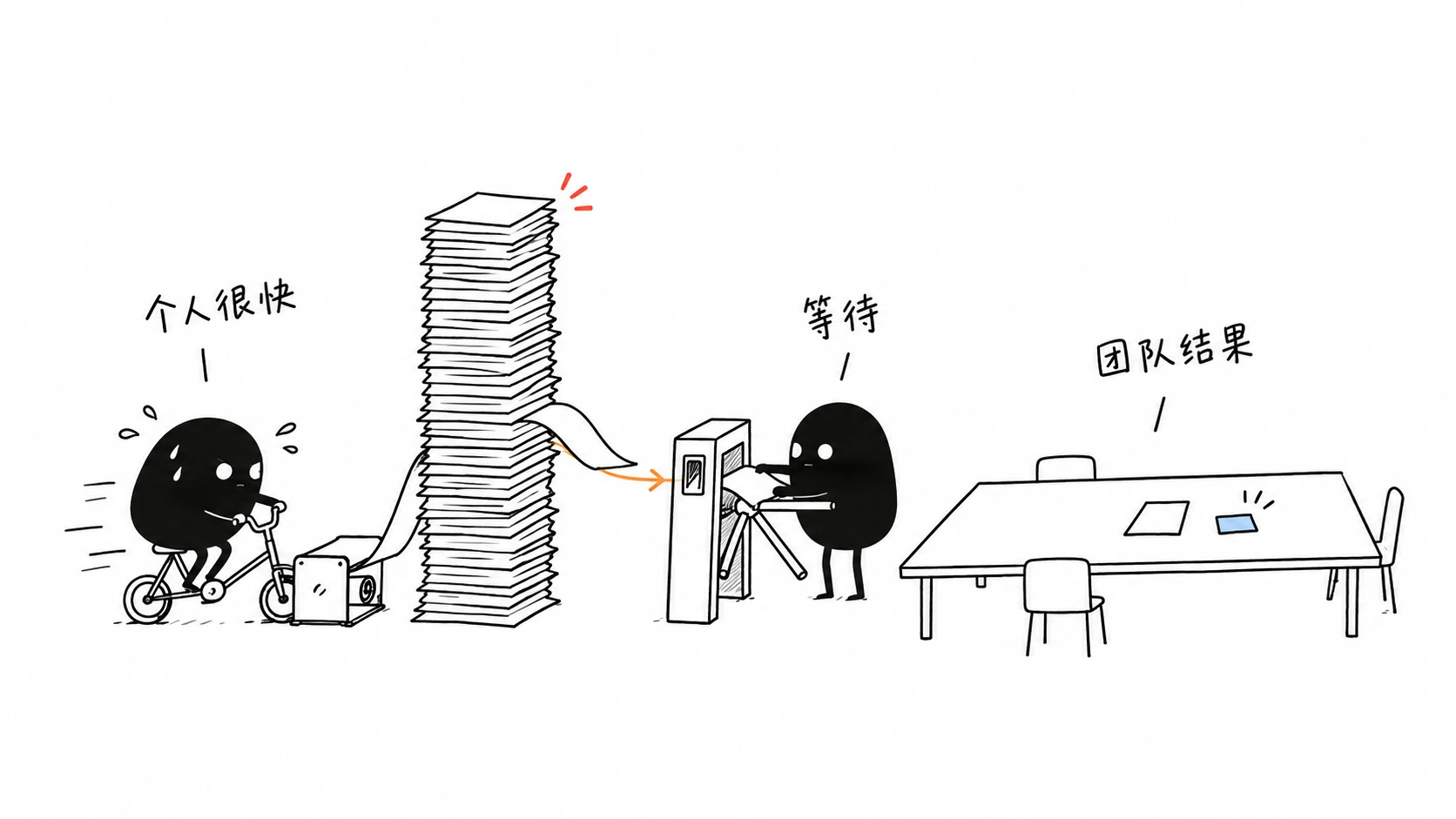
AI can help one person draft, organize information, or complete repetitive work faster without making the team faster. If tasks still move through chat, judgments stay in a few people’s heads, and outputs cannot feed the next step, work simply piles up faster at handoffs.
Everyone looks busier, but the real bottleneck has not moved.
We often look for efficiency in the wrong place
It is easy to define efficiency as an individual finishing faster. Teams then compare who writes fastest, does the most, or gets the prettiest generated output. But business results depend on a chain: clearly defined tasks, reusable information, workable handoffs across roles, and timely decisions.
The slowest, least predictable link sets the overall pace. One person saving two hours does not help much if the next person spends two days clarifying definitions, asking for context, or redoing work.
Before asking everyone to use more AI, examine one concrete process, such as turning customer needs into a reviewable proposal. Who supplies the original information? Who sets priorities? Who checks facts? Who passes the result onward? Mark the waiting, follow-up questions, and repeated transfers to see where AI could help.
Use AI to make handoffs work better
Individual efficiency is a starting point. Next, make its outputs usable by others: understandable task context, traceable sources, recorded decisions, and a clear place for the next person to continue.
Observe one workflow from request to delivery. Where do people most often wait, search for materials, ask what was originally said, or redo work? Improving one or two of these points often matters more than adding another tool.
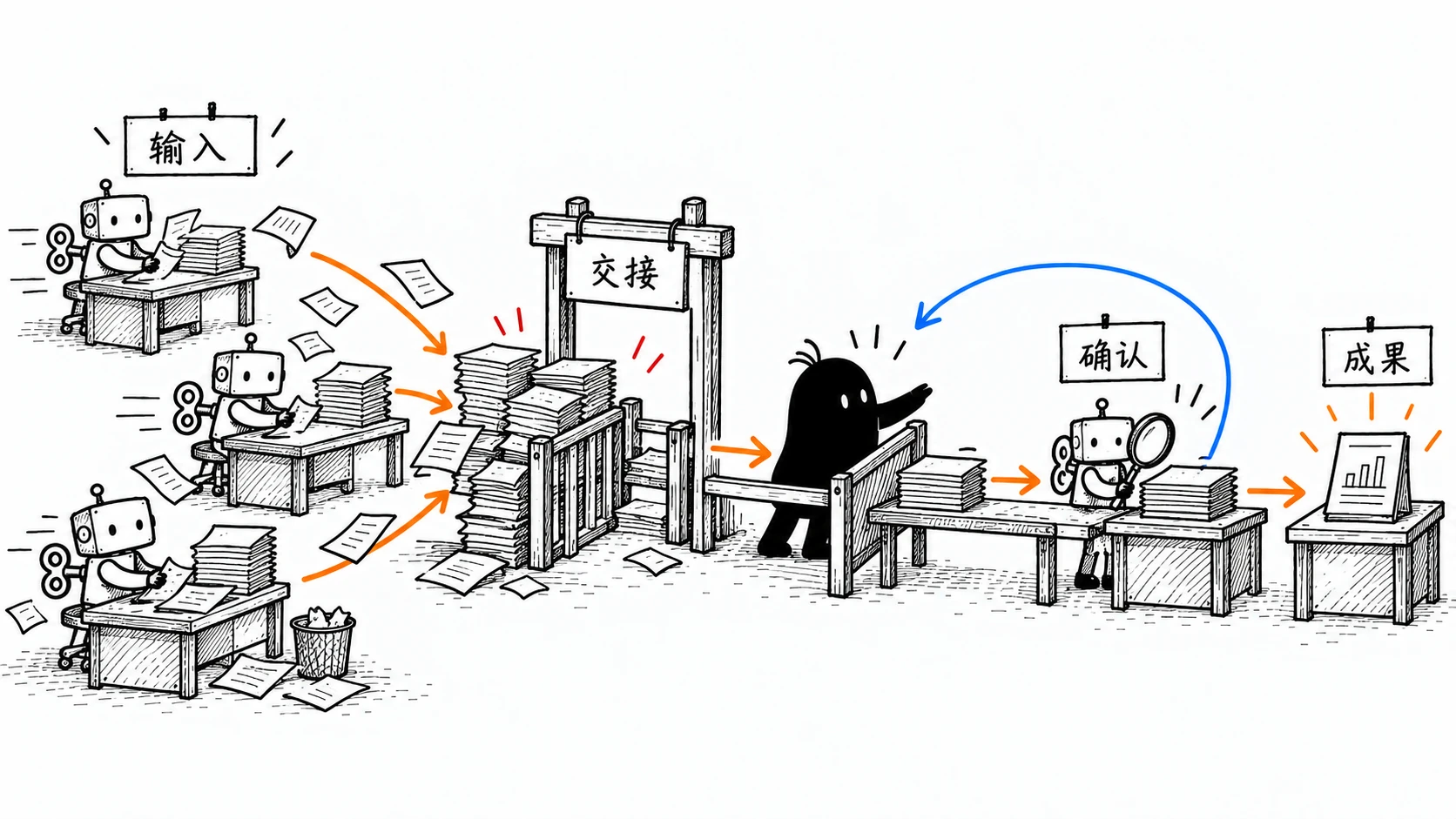
Each handoff in the diagram should answer three questions: what goes downstream, where its evidence comes from, and who can approve or return it. AI can help organize materials, perform initial analysis, and prepare drafts. But incomplete inputs, business-critical judgments, and external outputs still require an owner and verifiable evidence.
When work gets done faster, handoffs need to get clearer. Otherwise, speed just adds noise.
Measure whether the whole team moves faster
Look beyond generation counts and individual time spent. Track first-pass acceptance for one task type, follow-up questions per handoff, or time from start to a reviewable result. These measures are imperfect, but closer to showing whether the team takes fewer detours.
When an AI practice improves these measures, add it to standard processes and examples. That is how an individual technique becomes a team capability.
Bring individual AI workflows into shared projects with KuWork
KuWork can retain shared task context, materials, and deliverables in projects, with different AI partners collaborating on research, analysis, writing, or review. Start with one clear handoff: organizing inputs, drafting with sources, or preparing instructions the next colleague can use. Business owners should still confirm key judgments, and system read/write and automation scope must be checked against actual authorization and version.
Measure whether that handoff eliminates a follow-up question or manual transfer, or reaches a reviewable state sooner.
Frequently asked questions
Should the whole team use the same AI tool?
First agree on handoff formats, information boundaries, and responsibilities. Then discuss tools. A shared tool cannot automatically fix gaps in collaboration.
How can AI-generated content avoid creating more rework?
Include sources, a named reviewer, and a clear statement of where the work applies. Keep human review and approval for anything that could create external risk.
Something you can do today
Choose a collaboration process that has been getting stuck and record just five actual handoffs: waiting time, follow-up questions, and reasons for rework. Do not prescribe an AI improvement target yet. Find the most repeated friction, then decide whether tools and process changes are worth applying together.
This record also provides a reliable baseline for the next pilot, instead of relying on a feeling that things seem faster.
Put AI within reach of your whole team.
Connect expertise, enterprise knowledge, and real workflows with KuWork.