Where should your first AI pilot start?
 KuWork
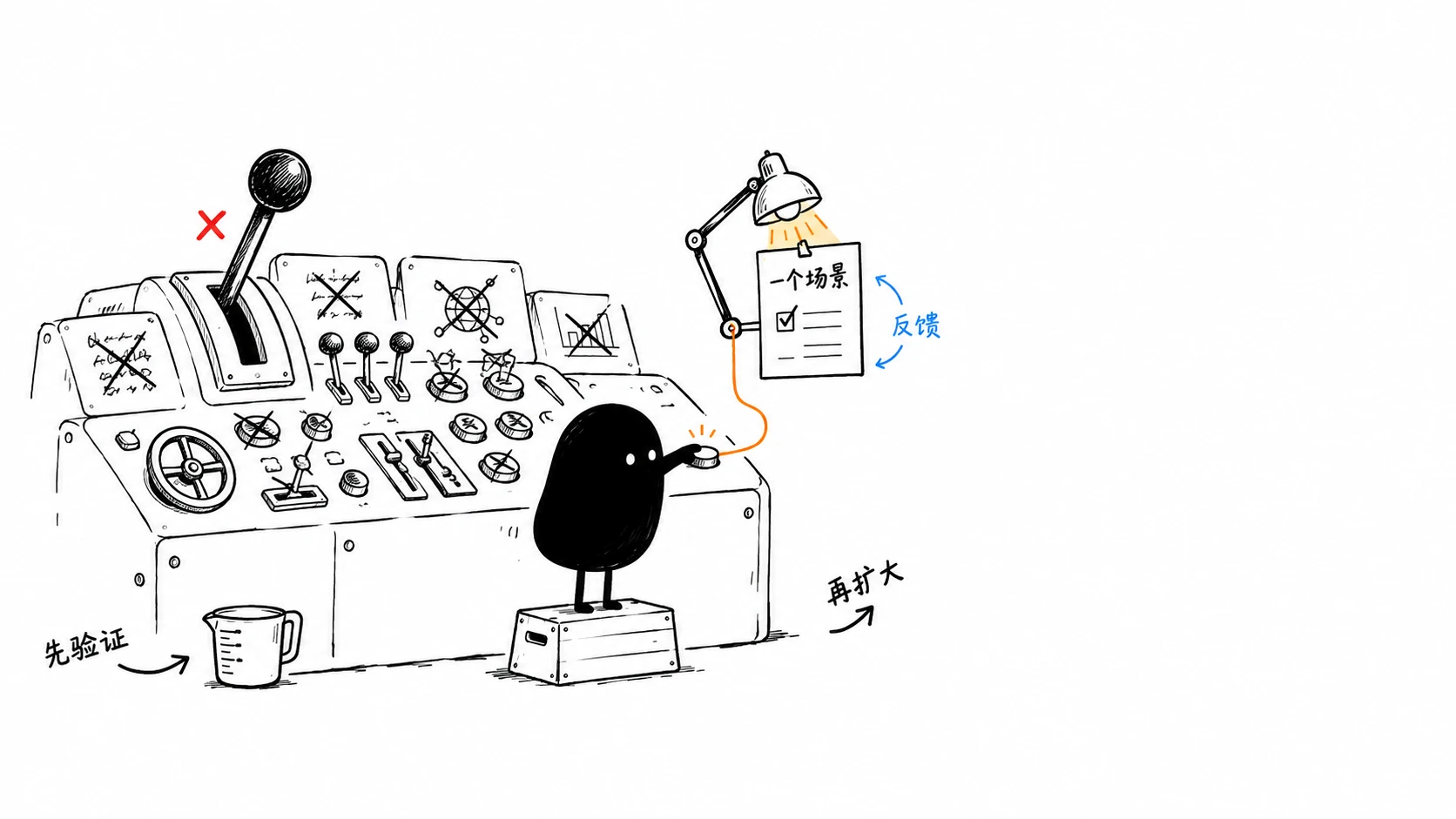
When adopting AI, resist rushing to buy an all-purpose platform. Find a real, repeated, clearly bounded work problem and run a visible pilot. Only completing it will show whether AI removes a step from current work. Discuss expansion afterward.
A small first step is fine. What matters is understanding the problem.
Why starting too big can slow you down
Large projects look strategic but combine too many uncertainties: goals are not broken down, permitted materials are unclear, processes lack owners, and results have no agreed measures. Even after launch, it can be difficult to say what the tool solved.
A safer starting point is a frequent task, such as organizing action items after meetings, summarizing similar materials, or preparing a standardized project handover. It should already have someone doing it regularly, reasonably clear inputs and outputs, and reviewable results.
One practical condition also matters: the pilot owner must be willing to change how work gets done. If nobody confirms inputs, checks results, or handles exceptions, even a suitable tool remains a demo. Before starting, define what people own, where AI helps, and how to return to manual work when something goes wrong.
Answer five questions before the pilot
- What is the problem? Describe current time spent, bottlenecks, and people affected before describing the tool you want to buy.
- Who owns it? Define the responsibilities of the business owner, users, reviewers, and technical support.
- What information can we use? Define what is in scope, which information is sensitive, and how it will be masked or anonymized.
- What does success look like? Look for fewer follow-up questions, faster first drafts, or more complete handoffs. Usage counts alone are not enough.
- What if it does not work? Set a pilot duration, exit conditions, and a retrospective date to avoid open-ended investment.
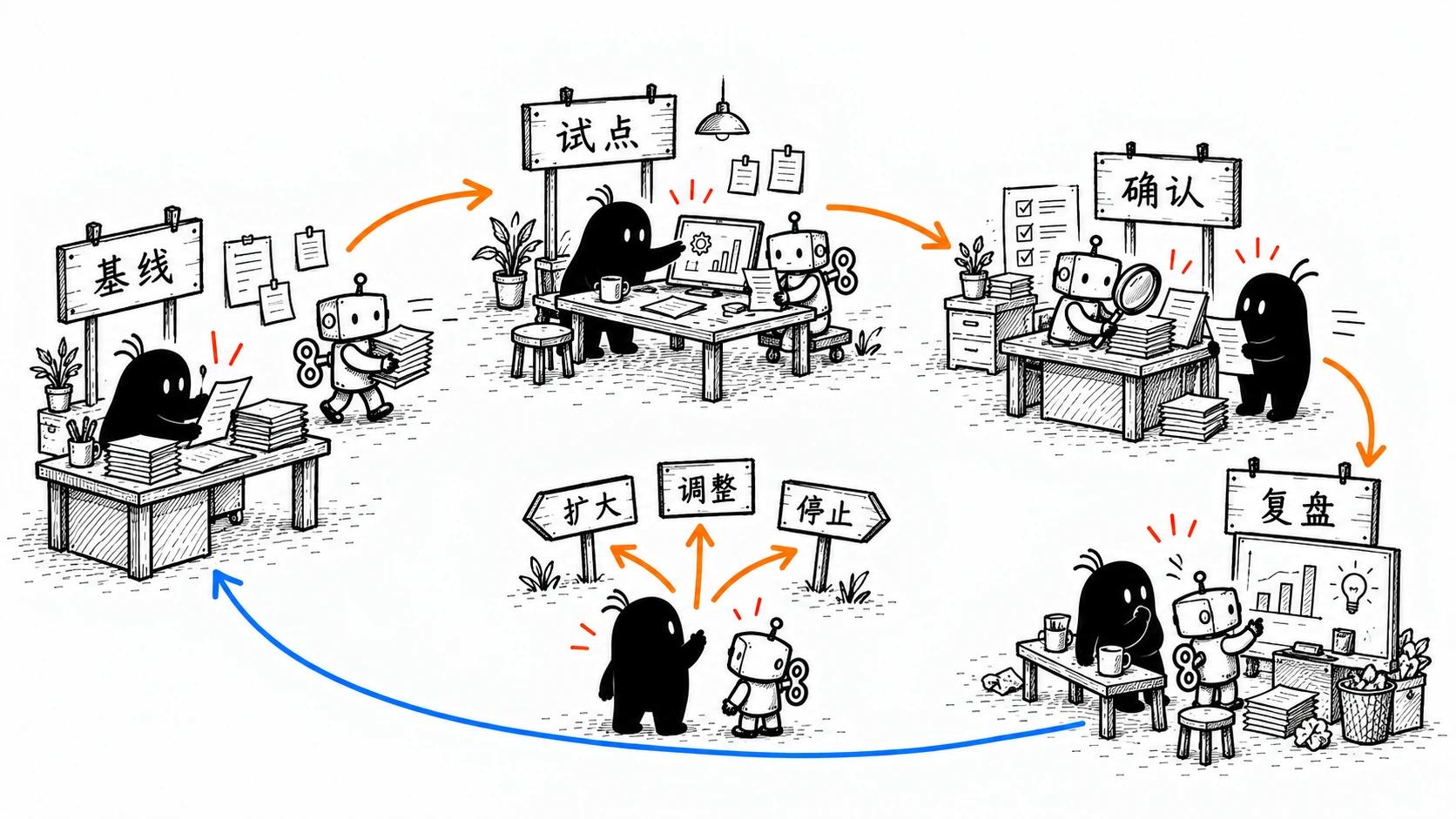
Follow this sequence. Record the original process as a baseline before judging improvement. Include human confirmation during operation to identify mismatches early. Then decide whether to expand, adjust, or stop. A successful pilot cannot necessarily be copied unchanged across departments. Every expansion requires a fresh check of materials, permissions, and responsibilities.
Design the workflow as part of the pilot
A pilot is more than asking a few people to try a tool. Map the original workflow, where AI participates, human review points, and the final owner. This reveals whether problems come from the model, materials, task definition, or collaboration.
Test a real workflow in KuWork
KuWork can organize goals, materials, tasks, and outputs in projects, with AI partners supporting preparation such as research, analysis, and writing. Start with a low-risk, reviewable step. Keep task context and permitted materials within the project, and have the owner check outputs and record exceptions. If the work requires other systems, automation, or external publication, separately confirm current connectors, read/write permissions, and human confirmation mechanisms.
The team should finish with a clear judgment: under which conditions did which work require fewer questions, transfers, or waits, and which conditions still caused risk or rework? Measure savings after the pilot.
An AI pilot should take a real task from start to finish, not stop at setting up an account.
Once one workflow runs smoothly, extend it to similar scenarios. At every step, recheck whether materials, permissions, and measurement criteria still apply.
Frequently asked questions
Should the pilot begin with the easiest task?
It does not have to be the easiest. It does need to be real enough to expose problems with information, review, and handoffs.
What if management wants immediate results?
Set a short-cycle, verifiable work outcome and explain where the findings cannot yet be generalized. A small result you can verify is more valuable than a large promise you cannot explain.
Something you can do today
Choose one repeated task from this week and document current time spent, input sources, output standards, the reviewer, and stopping conditions. Before buying tools or mandating use, use this one-page pilot card to decide whether the task deserves further evaluation.
At the end, record why you kept, adjusted, or stopped the approach, so different teams do not repeat the same exploration.
Put AI within reach of your whole team.
Connect expertise, enterprise knowledge, and real workflows with KuWork.